

AT A GLANCE
The short answer.
This essay considers how Lahore’s rooftops, streets and buildings shape the experience of Basant. It connects cultural activity with architectural space and heritage. The historical, regulatory and 2026-event statements in the archived text require verification before republication as current guidance. The article’s spatial perspective can be explored without treating it as advice on permitted events, roof loading or the safety of a specific building.
Key takeaways.
- Separate the article’s discussion from verified project-specific advice.
- Check the sources behind technical, historical or time-sensitive statements.
- Read the related articles for the wider design and development context.
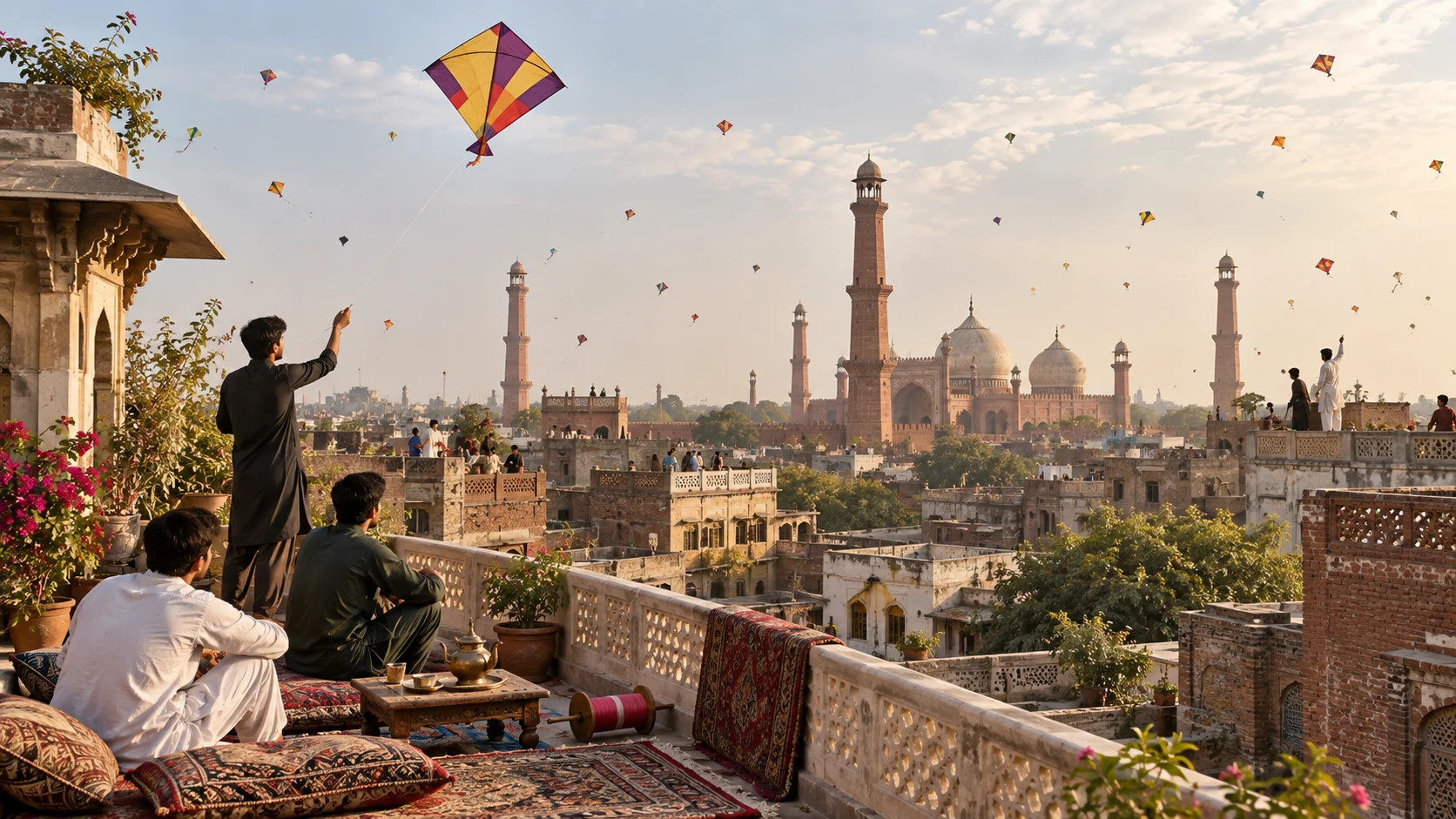
Every spring, Lahore transforms into a vibrant urban canvas. Basant, Punjab’s historic kite-flying festival, is more than a seasonal celebration: it is a powerful expression of cultural identity, architectural heritage, and evolving urban design.
Rooted in centuries-old Sufi traditions and later celebrated under Maharaja Ranjit Singh, Basant has long shaped the social fabric of Lahore. Its 2026 revival marks not just the return of a festival, but a renewed conversation about heritage preservation, public safety, and sustainable urban development in Pakistan.
Rooftops as Vertical Public Space
In Lahore’s Walled City (Androon Shehar), dense Mughal and Sikh-era havelis create a unique vertical landscape. During Basant, rooftops transform into dynamic social platforms, turning the skyline into a theatre of color and movement.
This seasonal activation highlights the importance of thoughtful architectural design in Pakistan, where climate-responsive elements like thick walls, courtyards, jharokas, and barsaatis enable safe and functional rooftop use. The event demonstrates how well-planned residential structures can support both cultural expression and environmental performance: principles that guide modern residential construction services today.
Economic Revival & Urban Regulation
Basant also fuels a significant economic cycle, supporting artisans, small manufacturers, tourism, and hospitality sectors. With the Punjab Regulation of Kite Flying Ordinance 2025, the festival now operates within a structured safety framework, ensuring responsible celebration.
As cities modernize, infrastructure safety becomes essential. Structurally sound rooftops, safe materials, and regulated development reflect the growing need for experienced builders. Whether revitalizing heritage zones or delivering modern projects, reliable construction techniques plays a crucial role in shaping resilient urban environments.
Preserving Heritage While Building the Future
Basant reminds us that architecture is not only about buildings, it is a celebration of culture and human experience. The festival’s transformation of private homes into shared civic spaces reflects the deeper connection between culture and construction.
At Buildscape, we believe responsible urban growth must balance tradition with innovation. As a trusted construction company in the twin cities, we integrate heritage sensitivity with modern architecture design to create spaces that are safe, sustainable, and future-ready.
To learn more about our company, please visit our website at www.buildscape.pk or contact us via email at [email protected].
CONTACT INFORMATIONBuilding 9, Adjacent to Giga Mall, Main GT Road, Islamabad, Pakistan
PO Box: 45730
UAN: 0333 1183903
Cultural context: questions to take forward
Use this topic to prepare a more specific discussion about your own requirements. The right approach depends on the available information and the agreed appointment; an article cannot establish the scope of an individual project.
A practical discussion checklist
- Document everyday use as well as architectural form.
- Include local perspectives in the narrative.
- Distinguish historical evidence from design interpretation.
Prepare your next conversation
Collect the relevant drawings, reference material and questions before contacting the team. Record what is confirmed, what needs review and who will resolve it. Ask for deliverables, exclusions and responsibilities to be set out in writing.
Sources and review status.
Original Buildscape articleThe original narrative is preserved. This edition adds a summary and reading aids; it does not verify source statistics, regulations, investment figures or professional claims.
Frequently asked questions.
What should I prepare before discussing this topic?
Bring the available project information and a short list of decisions you need help with. Document everyday use as well as architectural form. Include local perspectives in the narrative. Distinguish historical evidence from design interpretation.